Family Values
Family values from the old time until today
8 min read
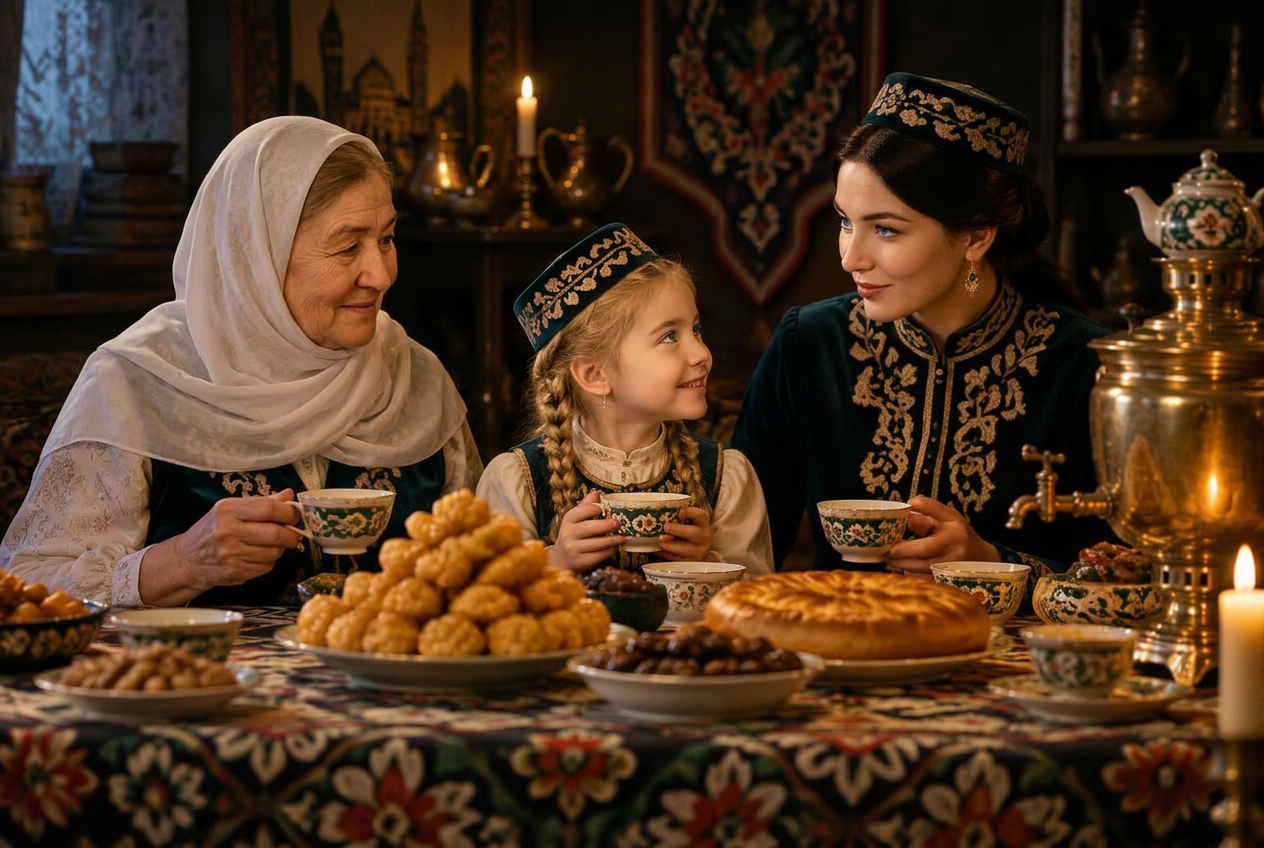
In a Tatar household the smallest unit is not the individual and not even the couple — it is the family line. This single fact explains almost everything a foreigner finds unusual, from the endless tea with relatives to the fact that your future wife will tell her mother things she has not yet told you.
The authority of the elders
Age confers standing. You greet the oldest person in the room first, you do not sit before they sit, and you do not contradict them in public even when you are certain they are wrong. The grandmother — äbi — is frequently the true centre of gravity: she keeps the prayers, the recipes, the memory of who married whom, and the moral reputation of every granddaughter.
For a foreign husband this is not an obstacle but an unusual gift. Win the äbi and the household will defend your marriage for decades.
Marriage as an agreement between two families
A Tatar marriage is contracted, not merely felt. The nikah is read at home in the presence of both families; the mähär, the bride's own portion, is agreed; and the two sets of parents formally become kin. Divorce is possible in Islam and does happen, but it is an event with witnesses on both sides, which is one reason Tatarstan's marriages tend to be resilient.
Practically, this means your intentions will be asked about early and directly. Vagueness reads as dishonesty, not as caution.
How children are raised
Discipline is affectionate but constant, and it is applied earliest to daughters. A girl learns to serve tea to guests before she learns to read; she learns that her name and her family's name are the same thing; she is asked, every single time she comes home, who walked her to the door.
By the time she is grown, the rules no longer need enforcing — they have become taste. That is the whole mechanism behind the thing foreign men find hard to believe: a thirty-year-old professional woman who has genuinely never had a boyfriend.
The calendar you quietly join
Eid al-Fitr and Eid al-Adha, the bäbi ashy feast at the naming of a first child, the summer Sabantuy in her family's village, funerals and forty-day memorials, and the constant traffic of guests who must be fed before they are questioned.
A husband who shows up for these things — reliably, in a clean shirt, with the right small gift — is a husband the family will call theirs.
Private consultation
Questions about marrying a Tatar woman?
Write to our matchmaker with a short account of yourself and what you are looking for in a wife. Every enquiry is answered confidentially.
Ask Matchmaker