Traditions & Dress
The tulip, the kalfak and the art of covering beauty
8 min read
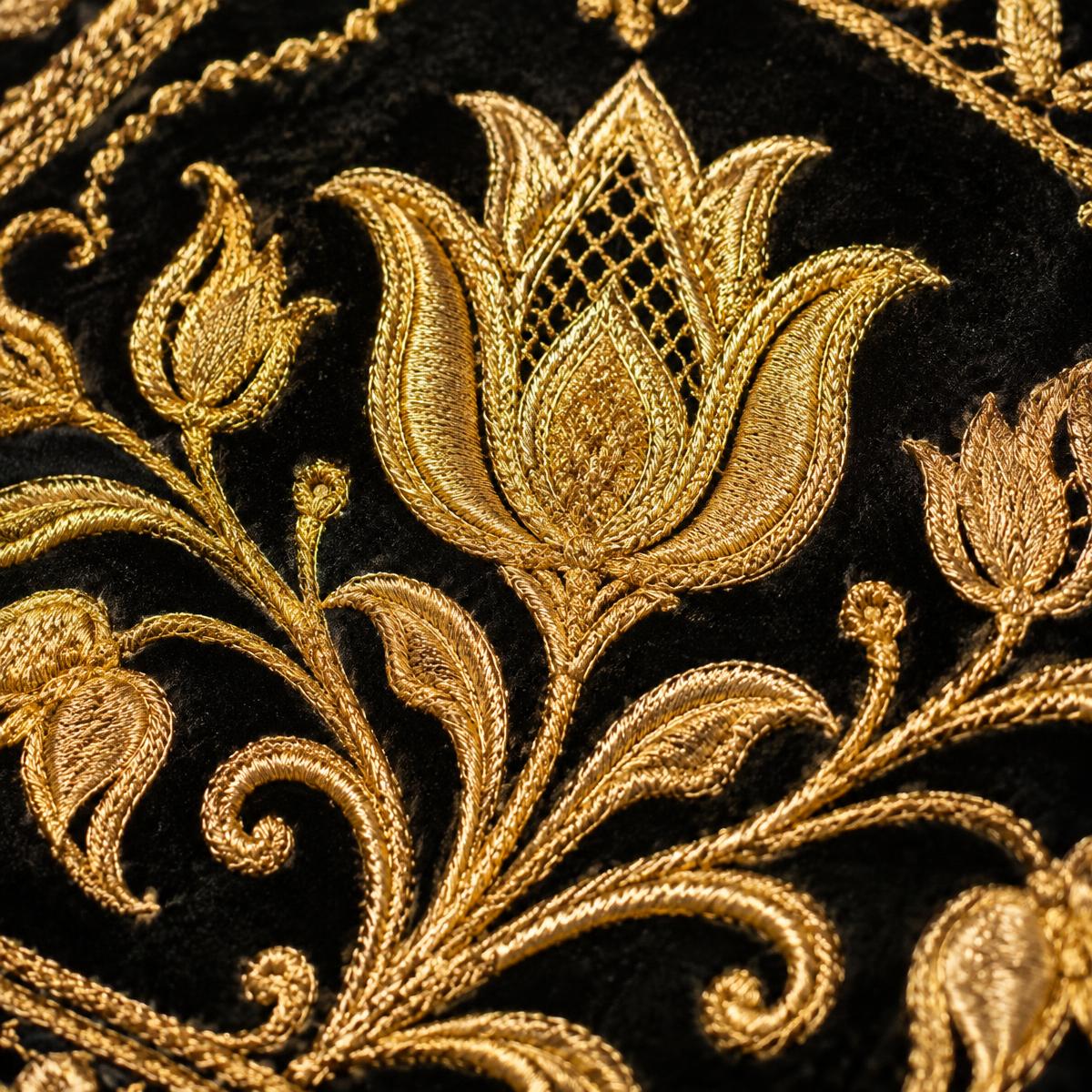
Tatar decorative art is one of the few European folk traditions in which the human figure is almost entirely absent. Islamic ethics turned the artistic gift of the Volga Tatars toward the plant world: the tulip above all, then the vine, the carnation, the pomegranate, and the endless interlaced geometry that stands in for the garden of paradise. What looks at first like simple flower-work is in fact a theology — beauty that points beyond itself instead of at a body.
The same instinct governs how a Tatar woman dresses. Nothing in the traditional costume is designed to expose; everything is designed to be noticed slowly.
The costume, piece by piece
The foundation is the kulmek, a long tunic-dress with wide, full-length sleeves, historically reaching the ankle and worn with soft trousers beneath. Over it comes the kamzol, a fitted sleeveless or short-sleeved overdress of velvet or heavy silk, edged with braid, coins or gold cord — the piece that gives the Tatar silhouette its unmistakable line: covered, but never shapeless.
On the head, the kalfak: a small embroidered cap, worn by unmarried girls with a light veil and by married women beneath a larger scarf. Traditionally the bride embroidered her own kalfak, and the quality of her gold-thread work — the tambour stitch, the tiny river pearls, the metal spangles — was read by her future mother-in-law as a report on her patience and her upbringing.
Footwear was the ichigi, soft leather boots of coloured mosaic work; jewellery ran to the hasite, a broad embroidered breast-band hung with coins and amulet cases containing verses of the Qur'an. Wealth was worn, but it was worn over the heart, not on display.
What survives in a modern wardrobe
A woman in Kazan today wears a tailored coat and boots like any European. But open her wardrobe and you will usually find a long-sleeved dress kept for Eid, a light scarf folded for the mosque or for a village visit, and — very often — a kalfak or an embroidered piece inherited from a grandmother.
Her everyday standard follows the same logic even in modern clothing: sleeves rather than straps, hemlines below the knee, nothing transparent, nothing tight. She will tell you it is simply her taste. It is in fact an entire ethical system, translated into fabric.
For the foreign suitor
If you are invited to a wedding, expect the bride to change costume more than once: a white European gown for the registry, and a green or deep-red velvet Tatar dress with gold work for the nikah and the family feast. Green is the traditional colour of the Tatar bride, and it is not chosen by accident — it is the colour of paradise.
Compliment the embroidery, not the body. It is the correct thing to notice, and everyone in the room will register that you understood.
Private consultation
Questions about marrying a Tatar woman?
Write to our matchmaker with a short account of yourself and what you are looking for in a wife. Every enquiry is answered confidentially.
Ask Matchmaker