Wedding culture
Tatar wedding traditions: what the customs mean today
4 min read
By Tatarstan Bride editorial team · Original illustrations, not client photographs
A Tatar wedding is not simply a list of ceremonies to copy. It brings together religion, family hospitality and customs that have changed over time. For a foreign groom, the useful question is not ‘What must every Tatar wedding include?’ but ‘What matters to this family, and what do we both want?’
The Tatarstan cultural resource centre describes historical Kazan Tatar wedding customs in stages around the wedding itself. Its account is cultural history, not a modern instruction manual. Today, families may keep some traditions, adapt others or prefer a small celebration.
The introduction joins two family worlds
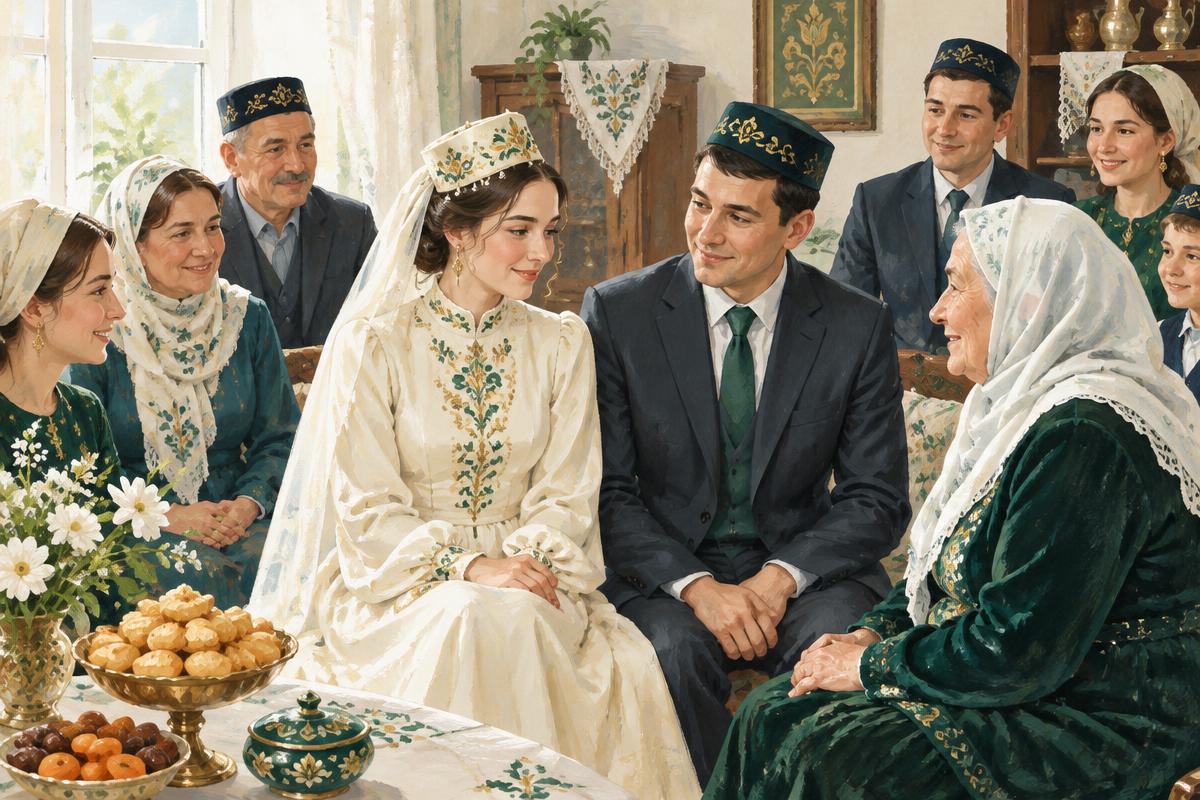
Historically, matchmaking and discussions between families formed part of the wider wedding process. That helps explain why an introduction may involve relatives rather than only two private individuals. In a modern marriage, both partners' willing agreement remains essential.
Ask which relatives should be included and what kind of first visit feels comfortable. Do not assume an old account of arranged ceremonies means a woman cannot choose her husband. History describes what happened, not what she must accept today.
Nikah is not the wedding party
For Muslim couples, Nikah is the religious marriage contract. The celebration is a separate event, even if the family arranges both on the same day. Civil registration is another process again. Ask what order the couple and their chosen imam require.
You may hear the Tatar form ‘mähär’ for mahr, the bride's agreed gift or financial right. Discuss it clearly and respectfully. Do not confuse it with money spent on a restaurant, relatives' gifts or a payment to the bride's parents.
Hospitality has a meaning beyond the menu
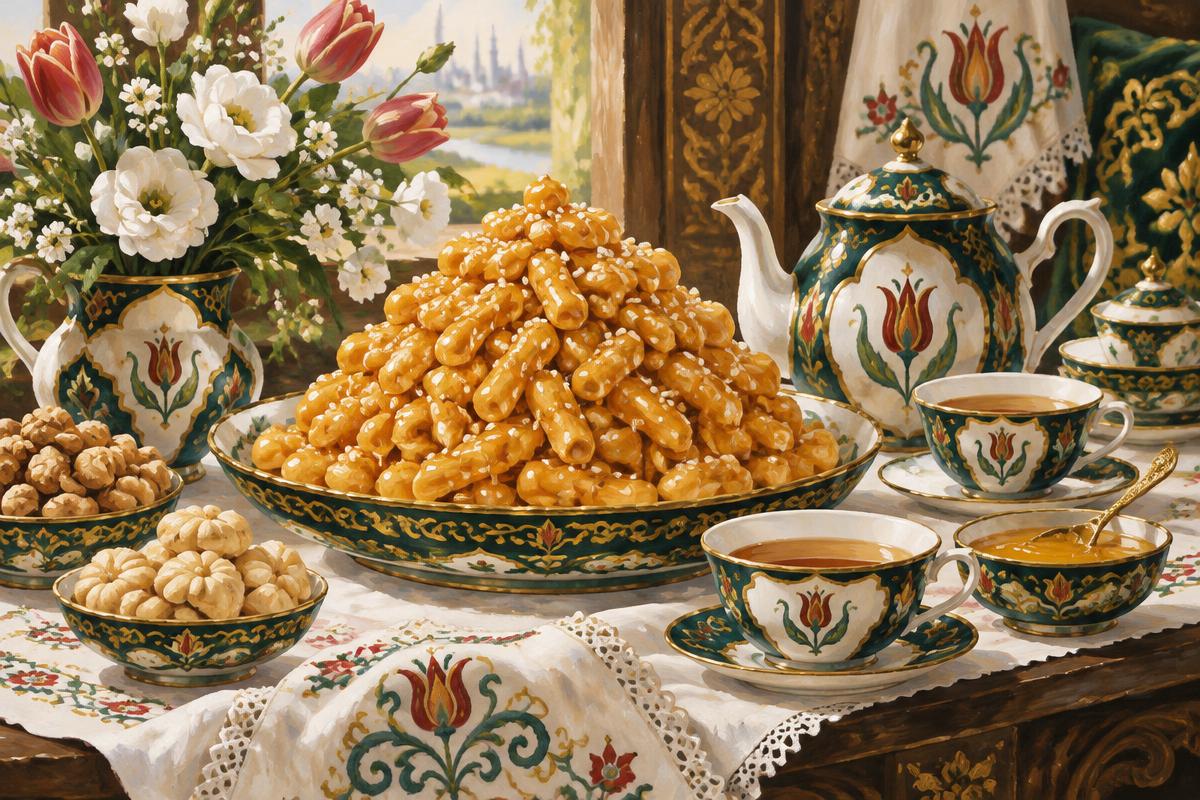
A generous table is one way a family welcomes guests. Chak-chak, the honey-coated pastry sweet associated with Tatar cuisine, may be part of a celebration. Tea, family recipes and shared dishes can carry memories of earlier generations.
Ask about dietary needs and whether the gathering follows halal requirements. Do not bring alcohol as an automatic wedding gift. A smaller meal can still be a meaningful welcome; the size of the table is not a measure of the couple's sincerity.
Some welcome customs are symbolic
Historical accounts describe gestures involving honey, butter or a soft pillow when welcoming a bride. These express hopes for sweetness, comfort or prosperity in the new household. They are cultural symbols, not requirements for a valid Nikah.
If a family wants to include a custom you do not understand, ask for its meaning in advance. You can show interest without pretending to know everything. The bride may have her own preferences about which traditions feel meaningful to her.
Clothing and photographs should be agreed
A kalfak is a traditional Tatar women's headpiece, but not every bride chooses the same style. A bride may wear a scarf, a traditional element, a contemporary modest dress or different clothing for different parts of the day. Let her choose without turning appearance into a test of identity.
Ask about photography at the religious ceremony and during family gatherings. Some guests may not want their images shared. Agree on social-media posting before the event, not after someone discovers a photograph online.
Plan the marriage budget, not just the wedding budget
Discuss guest numbers, venue, food, clothing, travel and who would pay for what. Make space for mahr and the costs of your future home. An international couple may need translations or legal advice as well as celebration expenses.
It is fine to prefer a simple wedding. Say that early and kindly, then listen to what matters to her. The best tradition you can begin together is making decisions without pressure, showing respect for both families and protecting the life that starts after the guests leave.
Sources and further reading
- Tatarstan cultural resource centre: Kazan Tatar wedding customs (Russian)
- Tatarica encyclopaedia: the Tatar wedding ritual (Russian)
General information, not legal advice or a religious ruling. Family customs vary. Confirm current requirements with the relevant authority or your officiating imam.
Continue reading
Private consultation
Wondering how you would fit into her family traditions?
Share your questions with the matchmaker in a private consultation request. Understanding each other's expectations is a better starting point than planning a perfect wedding picture.